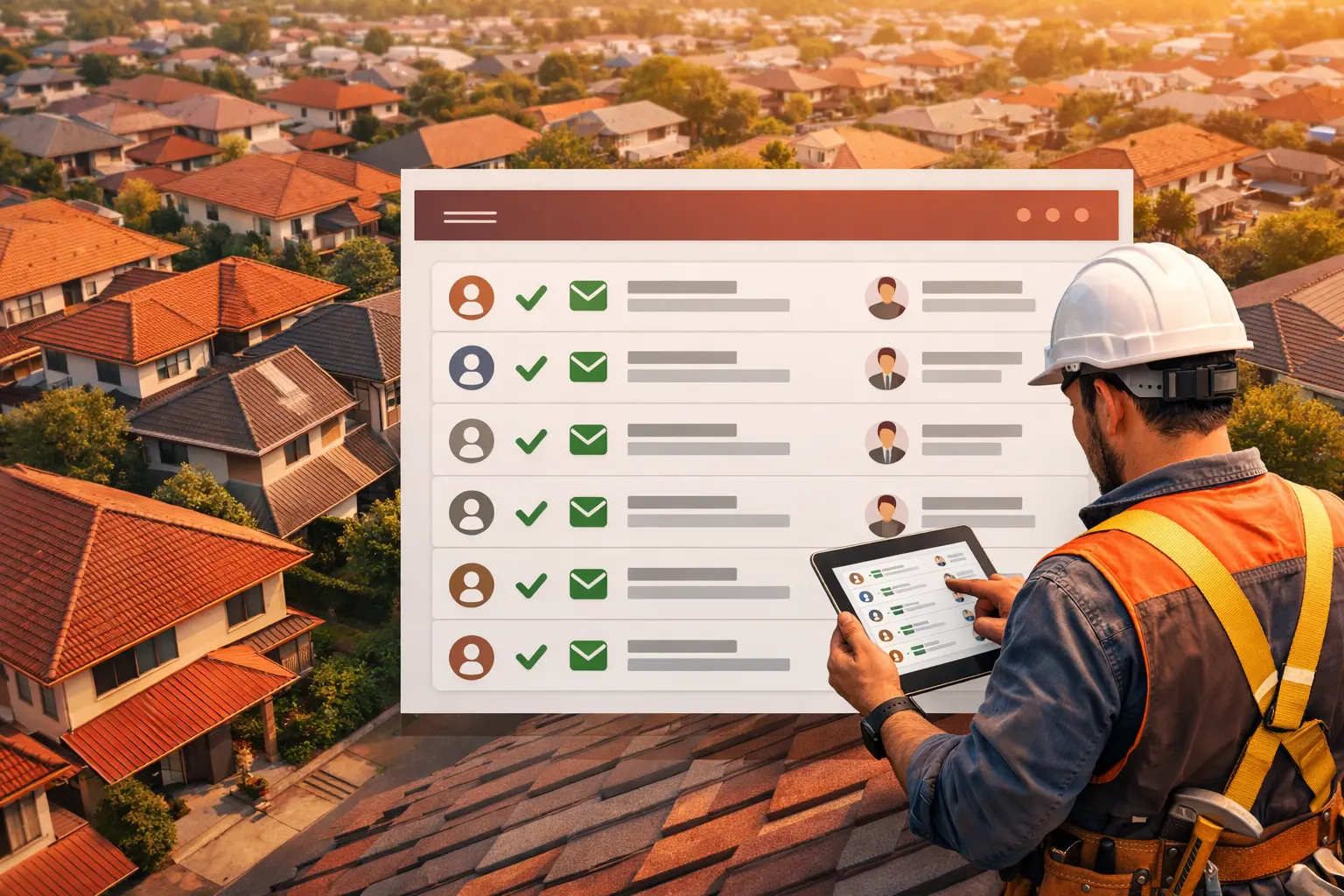
Roofing Lead Generation: How to Find Roofing Contractors and Jobs
Roofing Lead Generation: How to Find Roofing Contractors and Jobs
Roofing businesses need customers. Full stop. A roofing contractor without a pipeline of new jobs has slow months and unpredictable cash flow. Most established crews get 30 to 50 percent of work from referrals. But referrals are not enough. They do not arrive on demand. They get thin in winter.
This guide covers how roofing contractors find new jobs and customers using modern lead generation tactics. It also covers how companies that sell services to roofers (suppliers, software, financing) find roofing decision makers to pitch to.
The same Maps-first local motion is covered in our local lead generation complete guide. For trade and contractor prospecting in general, see how to get contractor leads and Google Maps as a cold lead source. The Google Maps scraper workflow is where most teams run type-and-location searches.
Why Roofing Lead Generation Is Different
Roofing has a unique sales dynamic. Unlike home services that get leads through platforms (plumbing, HVAC), roofing work comes from property decisions that happen sporadically. A roof goes 25 years. A leak happens once every five. When it does, someone needs a roofer. Fast.
That creates opportunity: roofing contractors who stay visible to property managers, facility coordinators, and other decision makers get the job. Those who do not stay in the background, hoping a referral materializes.
The traditional approach was networking, reputation, and word of mouth. That still works. But you can accelerate the pipeline with targeted outreach.
Types of Roofing Leads
Not all roofing leads are the same. Here are the segments roofing contractors typically chase.
Residential roofing. Homeowners with damage (insurance claims), aging roofs, or upgrades. Usually one-off jobs. Lower average contract value than commercial but higher volume.
Commercial roofing. Office buildings, warehouses, retail locations, industrial facilities. Higher contract value. Longer decision cycle. Requires decision maker relationships.
Multi-family (apartments, condos). Property managers, HOAs, building owners. Recurring opportunities if you maintain the relationship.
Contractors seeking contractors. General contractors doing remodels need roofing subcontractors. They build relationships with roofers they trust.
Facilities management. Large organizations with multiple properties. They have a maintenance budget and recurring roofing needs.
Most roofing businesses chase two or three of these segments, not all five.
Find roofing jobs and contractors to partner with
Search your area for roofing contractors or property managers. Get verified decision maker emails and contact info.
Try WebLeads freeTrial · No sales call · Cancel anytime
How Roofing Contractors Currently Find Leads
Referrals and Word of Mouth (Most Common)
Do good work. People recommend you. The work flows.
This works until it does not. Referrals depend on past customers remembering you at the exact moment they need a roofer. That window is unpredictable.
Insurance Adjusters and Agents
After a storm, adjusters come. They sometimes refer roofers. You maintain relationships with adjusters in your area, and they send business.
This works but creates dependency on people outside your control.
Google Maps and Local Search
Roofing contractors show up in Google Maps. A homeowner searches "roofers near me" and calls you. This is passive lead generation. It requires strong ratings and recent reviews, which means good work plus follow-up.
Paid Ads (Google Local Services, Facebook, Google Ads)
Running paid search for roofing-related keywords or local services ads to capture people actively searching for roofers.
High cost per lead if done wrong. Effective at scale if managed right.
Networking and Local Relationships
Sponsoring local sports teams, joining chamber of commerce, building relationships with contractors and property managers.
This works but takes time to compound.
A Different Approach: Targeted Outreach to Decision Makers
Most roofing contractors do not proactively prospect for leads. They wait for leads to come through channels they already have. This is passive. And it leaves money on the table.
The alternative: build a list of roofing decision makers in your area and reach out with a specific value proposition. This works for:
- Roofers looking for general contractors to team with
- Roofing suppliers finding contractors to build relationships with
- Financing companies pitching to roofing contractors
- Agencies offering marketing or CRM services to roofing companies
Here's the workflow.
Step 1: Identify Your Target Segment
Be specific. "Roofing contractors in Arizona" is too broad. "Commercial roofing contractors in Phoenix with 10+ employees" is actionable.
If you're selling to roofers, pick a segment. If you're a roofer looking for work, pick a geography and customer type (residential, commercial, HOA).
Step 2: Find the Contacts
Use Google Maps to find roofing businesses in your target area. Search "roofers in [city]" or "commercial roofing contractors near [location]." You'll get dozens of results.
But Google Maps returns businesses, not contacts. You need decision maker names and emails to reach out.
That's where WebLeads comes in. Enter your search criteria, run the search, then enrich results with decision maker emails. You get:
- Contractor name and address
- Phone number
- Website
- Google rating and review count
- Owner or manager name
- Verified email address
Step 3: Filter and Qualify
Not every roofing contractor on the list is the right fit. Filter by:
Size. Look at the website and Google reviews to estimate if this is a solo operation, a small crew (2-5 people), or a larger company. Your pitch changes based on size.
Activity level. Recent reviews and an active website mean the business is operating and has work flowing. Old reviews or no site means they may be inactive or seasonal.
Specialization. If you're selling to residential roofers, skip the commercial roofing company.
Geographic scope. A roofer whose service area includes your location is a better target than one 100 miles away.
Step 4: Outreach
Personalize your reach out. Do not send a generic blast.
If you're a roofer reaching out to general contractors:
"Hi [Manager Name], I noticed [Company Name] does remodeling work in [City]. Our crew handles roofing in [City] and we've done work for contractors like [Similar Company]. If you ever need a subcontractor you can trust for roofing, let's grab coffee."
If you're a vendor selling to roofers:
"Hi [Owner Name], saw that [Company Name] does [Roofing Type] in [City]. We work with [similar companies] on [specific pain point like scheduling or quoting]. Worth a quick call?"
One email. One specific mention. One clear ask. That's the pattern.
Step 5: Follow Up
Most responses come on email 2 and 3, not email 1. Send a sequence:
- Email 1: Value prop and a question
- Email 2 (3 days later): New angle or proof point
- Email 3 (3 days later): Final ask and a deadline
Stop after three unless they respond.
Why Google Maps is the Best Source for Roofing Leads
Google Maps has nearly every roofing contractor in North America. It's updated constantly. Businesses claim their listings, respond to reviews, add photos. It's a directory maintained by the business owners themselves. That makes the data fresh.
Compare that to bought contractor lists. Expensive, stale, and shared with everyone else buying that list. Not worth it.
Google Maps plus targeted enrichment (names and emails) is the best-in-class approach for roofing lead generation.
Cost of Roofing Lead Generation
Buying a roofing contractor list: $500 to $2,000 for a list of 1,000 contractor names and phone numbers. Stale. Generic emails only. Shared with your competitors.
Building your own with WebLeads:
| Plan | Price/mo | Searches/day | People enrichments/mo | Email verifications/mo |
|---|---|---|---|---|
| Discover | Free | 2 lifetime | 10 lifetime | 20 lifetime |
| Starter | $24 | 1 | 500 | 3,000 |
| Growth | $69 | 3 | 2,500 | 10,000 |
| Scale | $199 | 7 | 7,000 | 30,000 |
On the Growth plan at $69/mo, you can build 2,500 roofing contractor contacts per month with verified names and emails. Run that once and you've outpaced a purchased list in data quality, freshness, and cost.
Add compounding: you can rebuild the list every month across different cities, different specializations, or different customer types. A purchased list is stale in 90 days. A WebLeads subscription gets fresher every month.
The Bottom Line
Roofing contractors have always relied on referrals and reputation. That model still works. But the contractors building the most stable pipelines are proactively identifying decision makers and staying in front of them with relevant, specific outreach.
Google Maps has the data. WebLeads adds the names and emails. Together, they let you build a roofing lead generation system that does not depend on luck.
Start a trial. Run a search for roofers in your area or the contractors you want to team with. Enrich a few contacts. See what the data quality looks like. If it works (and it does), Starter at $24/mo gets you rolling.
Find roofing jobs and contractors to partner with
Search your area for roofing contractors or property managers. Get verified decision maker emails and contact info.
Try WebLeads freeTrial · No sales call · Cancel anytime