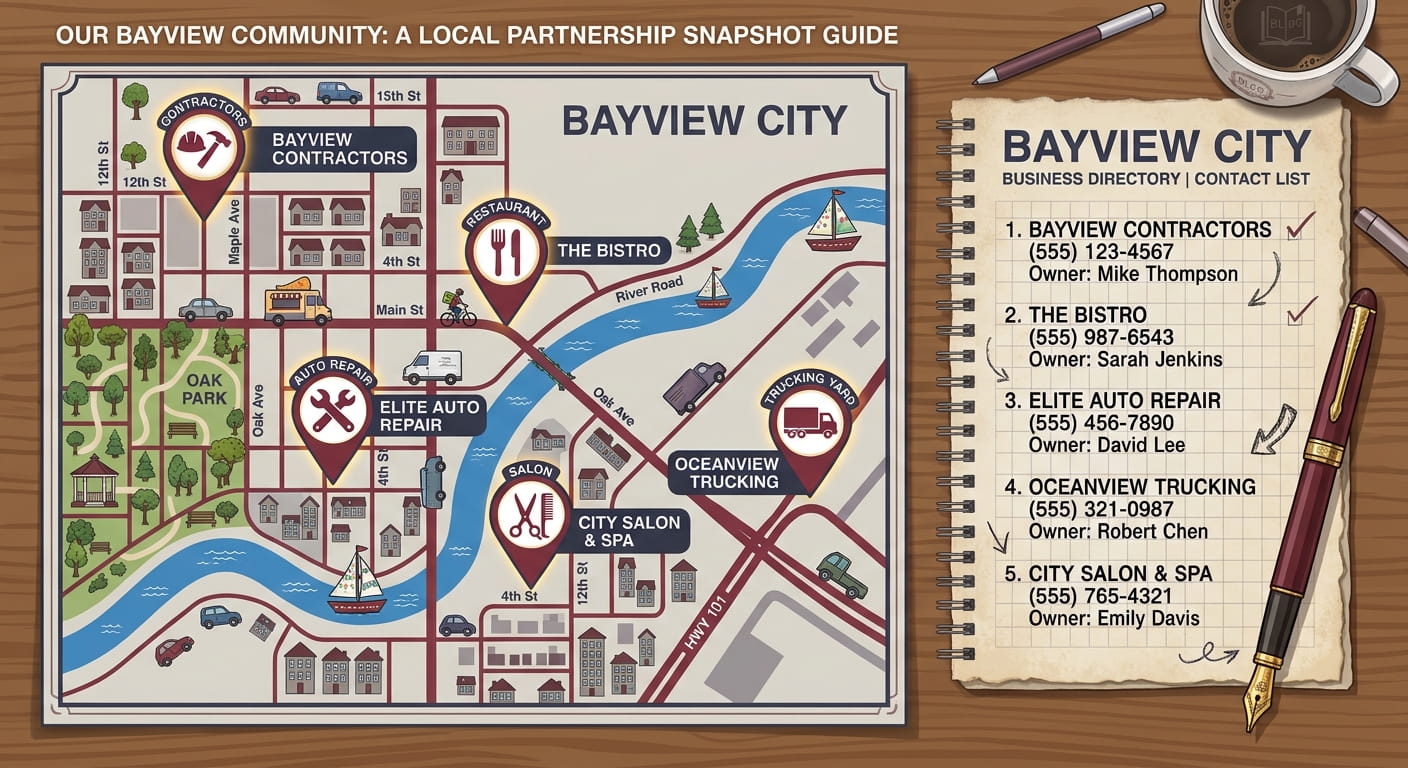
Commercial Insurance Leads: How to Find Local Businesses That Need Coverage
Commercial Insurance Leads: How to Find Local Businesses That Need Coverage
Most commercial insurance leads you can buy have already been sold to someone else. A contractor fills out a quote form, and several producers can end up calling him the same morning. The better move is to build your own list of local businesses that only you are working, and get to the owner before anyone else does.
This guide is for commercial insurance producers and small agencies who prospect local businesses themselves. You'll see how to build that list from Google Maps: pick a niche and a territory, pull the businesses, find the owner, qualify the rows, and open the first conversation.
Shared commercial insurance leads, exclusive leads, or your own list
Lead vendors mostly sell two things. Shared leads are quote requests sold to several agents at once. They're cheaper, but you're racing other producers to the same phone. Exclusive leads go to you alone. They cost more, and the intent is higher, because the owner asked for a quote recently.
What vendors really sell is intent: someone raised a hand. That's worth paying for when it's real.
A Maps list gives you the right businesses, in the right place, with a way to reach them. It doesn't give you buying intent. Nothing on a Google listing says who's underinsured, who their carrier is, or when the policy renews. You learn that on the call.
In return, you get a list you aren't sharing with a vendor's other buyers. A new taco spot in Mesa can show up on Maps before it lands in a compiled database, and you control the territory down to the neighborhood.
Pick one business type and one territory
"Small businesses in Texas" isn't a target. "Auto repair shops in Fort Worth" is. A narrow first list makes your questions sharper and your results easier to read.
Here's how a few common niches map to Maps searches and the coverage conversation you'd open with:
| Business type | Example Maps search | Coverage to ask about |
|---|---|---|
| General contractors | general contractor Austin TX | General liability, workers' comp, tools and equipment |
| Roofers | roofing company Tampa FL | General liability, workers' comp, commercial auto |
| Restaurants | restaurant Columbus OH | Property, liquor liability, workers' comp |
| Auto repair shops | auto repair Fort Worth TX | Garagekeepers, general liability, property |
| Trucking companies | trucking company Joliet IL | Commercial auto, cargo, physical damage |
| Salons | hair salon Scottsdale AZ | Professional liability, property, general liability |
Why these types? Coverage is often required (workers' comp, commercial auto, liquor liability), and the owner usually makes the call personally. There's no procurement team between you and the decision.
Pick the row you already know. If you've placed a few contractor accounts, start there. Owners can tell within one question whether you understand their work. If contractors are your lane, our page on contractor leads goes deeper on building trade lists, and the roofing lead generation guide covers that niche specifically.
For territory, start with one city or a cluster of suburbs you can actually work. Fifty businesses you call and visit teach you more than five hundred you never reach.
Commercial insurance lead generation from Google Maps, step by step
You can do this by hand. It's slow, but it works for a first test.
- Search the business type plus the city in Google Maps, exactly as you'd type it. Try a couple of variants ("roofer", "roofing contractor") because owners pick different categories.
- Open each listing and copy the name, phone, address, website and rating into a spreadsheet.
- Note the review count. A business with 200 reviews is established and busy. One with 3 reviews may be brand new, which is also interesting, because new businesses need their first policy.
- Visit the website if there is one. Look for an owner's name on the About page, the number of trucks or locations, and services that hint at risk (demolition, catering, towing).
- Repeat for the next search. Expect to spend real time on each listing.
That's why most producers stop after one afternoon. Manual research gives you a short list, not hundreds.
Getting to the owner
The business is the lead, but the owner is the sale. On a small shop's website, the About page often names the owner, and so do review replies on the Google listing. If you can't find a name, ask on the first call: "Who handles the insurance for the shop?" It's an honest question, and front desk staff usually answer it. For local accounts, a short visit with a card does more than a fifth email.
Doing the same thing faster in WebLeads
WebLeads runs the same search for you. Type a business type and a location, pick a search radius, and it collects matching businesses from Google Maps fresh on every search, with name, address, phone, website, rating and review count.
Before you export, you can narrow the results with these filters:
- Website availability (Any, Has website, No website). Use "Has website" if you want owner names and emails.
- Google rating, to skip listings with a pattern of bad reviews.
- Website Match, which keeps only businesses whose website mentions words you choose, like "commercial", "fleet" or "catering". LeadSwift has a similar feature, so it's not unique to us, but it's useful for finding the right kind of shop inside a broad category.
- Google Ads, to see who's running ads. A business paying for clicks may suggest it has marketing budget.
Review count isn't a filter, but you can sort by it after you export.
For decision makers, WebLeads looks for owner and manager names on the business website. When it finds one, it guesses the email pattern from the domain and SMTP checks the address when you unlock it. You only use a people enrichment when we find an email. Looking costs nothing. This only works when the business has a website, and plenty of businesses won't return a decision maker at all. Treat owner emails as a bonus on part of the list, and keep the phone as your main channel.
Plans run $24, $69 and $199 per month, depending on how many searches and people enrichments you need.
Need a list of local businesses to quote?
Search a business type and city. Get phones, websites, and owner names where available.
Start your trialTrial · No sales call · Cancel anytime
Qualify before you dial
Start with size signals. Review count, multiple locations, and a fleet mentioned on the website all suggest more exposure and a bigger premium. A trucking company in Joliet with 12 trucks on its homepage is a different conversation from an owner operator.
Then look at fit with your appetite. If your carriers don't write roofers above a certain height or restaurants with late night liquor sales, cut those rows now rather than after a 20 minute call.
Finally, check that the business is real and operating. Does the website load? Does the address match the map pin? Is the phone a business line?
If you do send email, verify the addresses first and watch your bounce rate in the first week. That covers the basics.
What to say on the first touch
Your goal on the first contact isn't to quote. It's to learn the renewal date and earn permission to come back before it.
Say you're prospecting auto repair shops in Fort Worth, and you found one with a strong rating, two bays visible in its photos, and a website that mentions towing. A short email might read:
Hi Maria, I work with a few independent repair shops around Fort Worth on their garage and liability coverage. I noticed you also do towing, which sometimes needs its own coverage. When does your current policy renew? If it's in the next few months, I'd be glad to take a look and tell you honestly whether anything's missing.
It's specific, local, and asks one easy question. The same structure works on the phone.
Log the renewal date for every business that gives you one. A list of 40 renewal dates is worth more than 400 cold rows, because it tells you exactly when to call back.
A note on compliance
Insurance is a regulated business, and outreach rules aren't one size fits all. CAN-SPAM (email), the TCPA (calls and texts) and state insurance licensing and solicitation rules vary, so check with counsel before you run a campaign. The FTC's CAN-SPAM compliance guide is a good plain English starting point for the email side.
For the wider playbook on prospecting local businesses, from territory planning to follow up, see our local lead generation guide.
FAQ
Where do commercial insurance leads come from?
Most producers mix three sources: referrals from existing clients, purchased lists or shared lead pools, and lists they build themselves. Google Maps is the easiest place to build your own, because nearly every contractor, restaurant, auto shop and trucking company has a listing with a phone number, address and often a website.
Can a lead tool tell me which businesses need coverage now?
No. A Maps based tool finds businesses and their contact details. It doesn't know who's underinsured, who their carrier is, or when their policies renew. You find that out by asking. A good first call is mostly about learning the renewal date so you can come back at the right time.
What business types are best for commercial insurance prospecting?
Pick types where coverage is clearly required and the owner makes the buying decision. General contractors, roofers, restaurants, auto repair shops, small trucking companies and salons all fit. Start with the one you already understand best, so your questions on the first call sound like you know their business.
Will I get the owner's email for every business?
No. Owner names come from the business website, so a business with no website won't have one. Even with a site, many businesses won't return a decision maker. When a name is found, the email is guessed from the domain and SMTP checked when you unlock it. Plan on the phone for the rest.
Is cold outreach allowed for insurance producers?
Rules differ by channel and by state. CAN-SPAM covers commercial email, the TCPA covers calls and texts, and each state has its own insurance licensing and solicitation rules. Check with counsel or your compliance contact before you start a campaign, especially if you plan to text or use an autodialer.
The short version
You can buy commercial insurance leads, or you can build a list only you are working. Pick one business type and one territory. Pull the businesses from Google Maps. Cut the ones that don't fit your appetite. Call with one specific detail and one question about the renewal date. Then do it again next week with the next niche.
Need a list of local businesses to quote?
Search a business type and city. Get phones, websites, and owner names where available.
Start your trialTrial · No sales call · Cancel anytime